
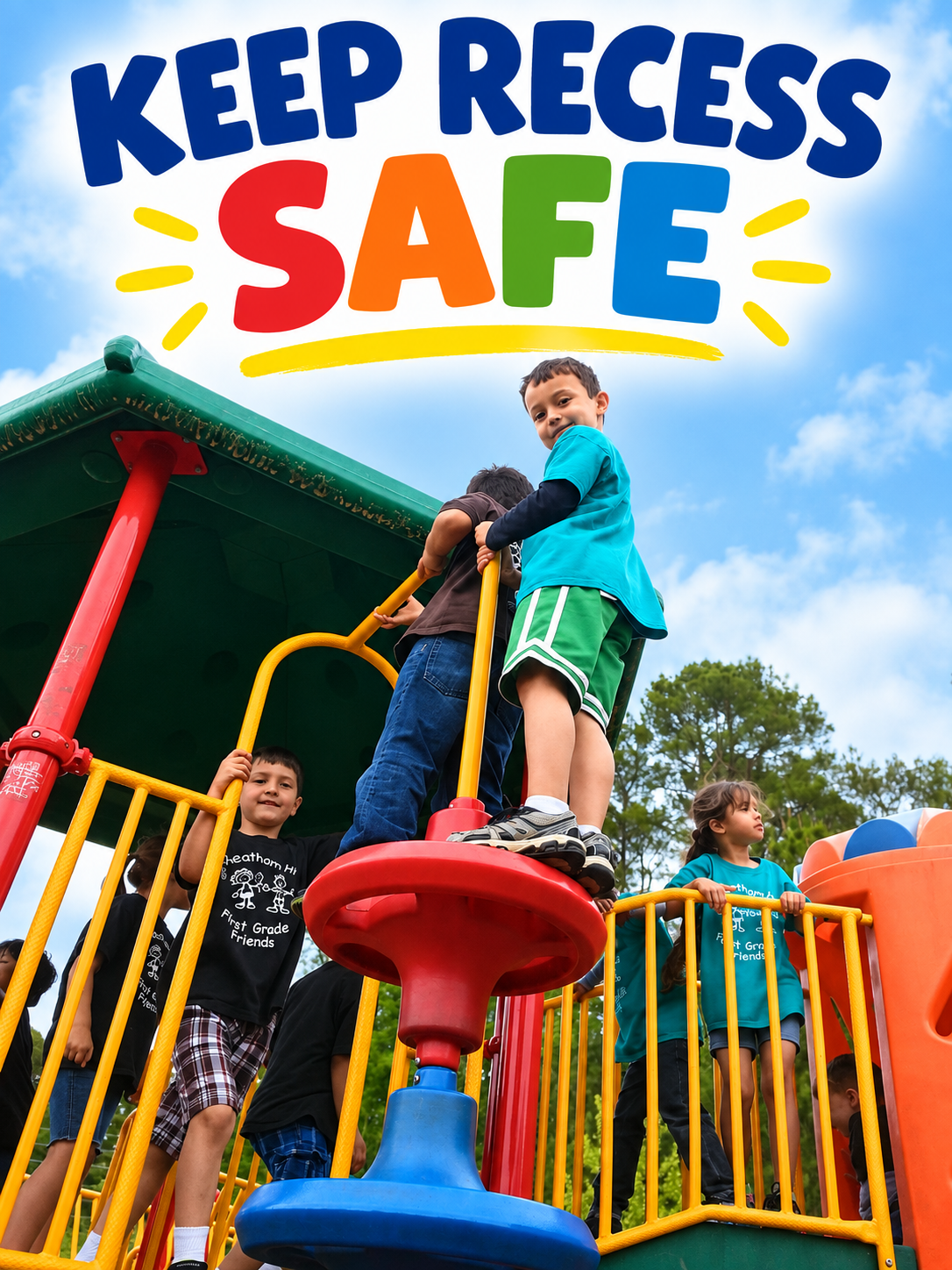
In a previous post called Recess. Lessons Learned on the Playground, I talked about the importance of recess and the many ways it benefits children. Recess gives kids a chance to explore, create, and make their own choices while building valuable negotiation, communication, and problem-solving skills. It’s also a chance for students to decompress, recharge, and enjoy time with friends.
Because of this, recess monitors need to give students the freedom to play, explore, and navigate social situations on their own. Our job isn’t to hover over every interaction or solve every minor disagreement. We should be present from the periphery and close enough to step in when necessary.
In another post (Recess Duty – Are you qualified?), I stressed the importance of taking recess duty seriously. There is a balance between giving students freedom and providing responsible supervision. Recess monitors shouldn’t scroll on their phones, catch up with colleagues, or become distracted. Instead, they need to serve as a safety net for students by actively watching the environment, monitoring equipment, recognizing potential problems, and making sure students behave safely and appropriately.
But there is another extremely important piece of the puzzle that schools need to consider:
Who is checking the playground itself?
Recess monitors can do an excellent job supervising students, but they shouldn’t be expected to identify every potential equipment or environmental hazard. Schools need a system for regularly inspecting the playground to ensure the environment is safe before problems arise.
-
Scan for sharp hazards: Are there protruding bolts, loose screws, or rough metal edges on the equipment or sports goals?
-
Evaluate overall wear and tear: Does any part of the play structure look cracked, unstable, worn down, or ready to break?
-
Watch for hidden pests: Are aggressive insects—like wasps or yellowjackets—nesting around the structure or benches?
-
Clear out unusual hazards: Has any trash, debris, or dangerous foreign object been left behind in the play zone?
And depending on the school and its surroundings, that last question can be particularly important.
Years ago, when I worked at a school in another city, part of my morning routine was scanning the playground for discarded needles and vials. It might sound extreme, but in that particular environment, it was a necessary safety precaution.
Every school has different circumstances. The point isn’t to create fear or make playground supervision feel overwhelming. The point is to know your environment and understand what potential hazards might exist.
So ask yourself:
Does our school have someone who regularly checks the safety of the playground and its equipment?
If the answer is yes, great!
If you’re not sure or the answer is no, this is worth discussing at a staff or facilities meeting. Establishing a simple system can go a long way toward preventing injuries. For example:
-
Daily Quick Scans: Assign recess monitors to conduct a brief visual sweep of the playground each morning to spot obvious hazards before kids arrive.
-
Weekly Deep Inspections: Have a designated teacher or facilities team member perform a detailed structural check of all equipment once a week.
-
Proactive Reporting: Document every finding immediately so repairs can be made before any safety risks reach the students.
It doesn’t have to be complicated.
Daily eyes. Weekly checks. Prompt action.
Recess belongs to the kids. They should have the freedom to run, play, create, negotiate, and solve problems. But that freedom depends on adults creating an environment where they can do those things safely.
Great recess supervision isn’t just about watching children.
It’s about watching the children, watching the environment, and making sure both are safe.
You may also enjoy the following:
Recess. Lessons Learned on the Playground
Recess Duty – Are You Qualified?
